Pune
08048045940

dgca ground school

Card 2

product image
DGCA - Ground School

RTR (A) – Radio Telephony Course in Pune SKYJET PILOT TRAINING ACADEMY, Pune Master Aviation Communication. Clear RTR in First Attempt. What is RTR (A)? The RTR (Restricted Radio Telephony – Aeronautical) license is a mandatory certification for every Commercial Pilot License (CPL) holder in India. It validates a pilot’s ability to communicate effectively, professionally, and safely with Air Traffic Control (ATC) during all phases of flight operations. Strong RT communication is one of the most important skills in aviation, directly impacting: Flight Safety ATC Coordination Airline Operations Cockpit Discipline International Aviation Standards Without RTR, a CPL candidate cannot complete professional pilot licensing requirements. Latest DGCA RTR Update – 2026 The RTR (A) examination process is now fully integrated under DGCA systems. New DGCA RTR Structure DGCA Conducted RTR Examination Integrated Written + Practical Assessment Pariksha Portal Written Examination eGCA Integrated Practical Process Scenario-Based RT Communication Testing Real-Time Aviation Phraseology Assessment Reduced Traditional Viva Dependency The updated system focuses on practical cockpit communication and operational understanding rather than only theoretical questioning. Why Choose SKYJET for RTR Training? At SKYJET, students are trained using real aviation communication standards followed by airline and commercial pilots. We focus on: First Attempt RTR Preparation Real-Time ATC Communication Practice DGCA-Oriented Training Modules Practical Cockpit Communication Confidence Building Sessions Airline Standard Phraseology Emergency Communication Handling Mock Oral & Practical Sessions Our training methodology prepares students to think and communicate like professional pilots. SKYJET RTR Course Highlights Real ATC Communication Practice Students practice: Tower Communication Ground & Taxi Procedures Departure & Arrival Calls Circuit Communication Emergency Phraseology Cross Country RT Procedures Controlled & Uncontrolled Airspace Calls DGCA Pattern Preparation Complete preparation for: RTR Written Examination Practical RT Assessment Voice Procedure Training Aviation Phraseology Communication Flow & Sequencing Confidence Building Modules Many students struggle with hesitation and communication pressure during RTR practicals. Our structured sessions help students: Speak confidently on frequency Avoid communication errors Build professional radio discipline Handle pressure situations effectively
Card 2

product image
DGCA - Ground School

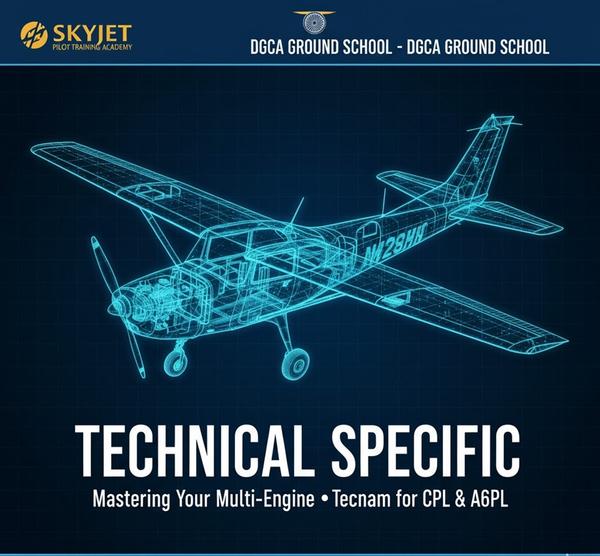
Cessna 172R DGCA Technical Specific Course | Complete POH & AFM Preparation Master the DGCA Technical Specific Examination for the Cessna 172R with a detailed, structured, and exam-oriented training program designed for student pilots, CPL aspirants, and aviation professionals. This course focuses on complete understanding and memorization of the Pilot Operating Handbook (POH) / Aircraft Flight Manual (AFM), ensuring safe aircraft operation and DGCA exam success. Why Choose This Course? The DGCA Technical Specific exam for the Cessna 172R demands precise knowledge of aircraft systems, operational limitations, emergency procedures, and performance calculations. Our training simplifies complex concepts into easy-to-understand modules with a strong focus on DGCA examination patterns. Whether you are preparing for your CPL Technical exams or enhancing your aircraft knowledge, this course provides a complete learning solution for the Cessna 172R.

Card 2

product image
DGCA - Ground School

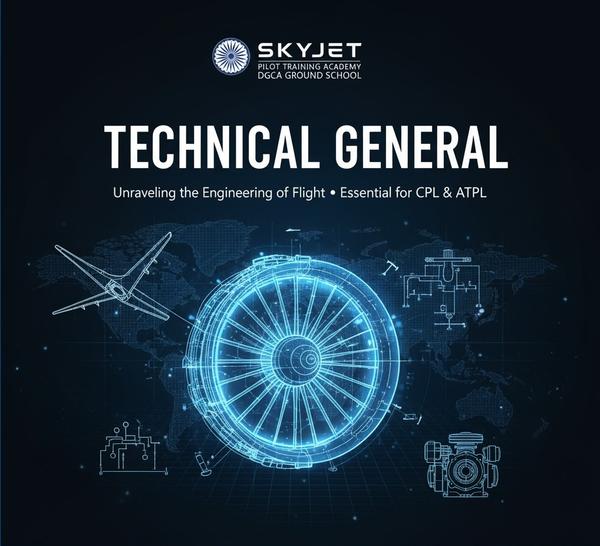
DGCA CPL Technical General: Complete Guide to Aircraft Systems & Aerodynamics Technical General is one of the most important and conceptually demanding subjects in the Directorate General of Civil Aviation (DGCA) Commercial Pilot License (CPL) syllabus. It forms the foundation of aviation engineering knowledge, helping aspiring pilots understand how aircraft function, perform, and respond under different conditions. A strong understanding of Technical General is critical because a pilot is the first responder to any in-flight system malfunction. Knowing how aircraft systems are designed to work enables pilots to quickly identify issues and take corrective action. Key Topics Covered in DGCA Technical General The DGCA Technical General syllabus is broadly divided into two major sections: 1. Principles of Flight (Aerodynamics) This section explains the science behind how an aircraft flies and remains stable in the air. Four Forces of Flight Learn how Lift, Drag, Thrust, and Weight interact during various phases of flight. Airfoils & Lift Generation Understand how wings generate lift using aerodynamic principles like Bernoulli’s Principle and the importance of Angle of Attack (AOA). Stall & Recovery Techniques Study the causes of stalls and standard stall recovery procedures, essential for flight safety. Aircraft Stability & Control Learn about longitudinal, lateral, and directional stability, and how control surfaces like ailerons, elevators, and rudder function. Types of Airspeed Understand the differences between IAS, CAS, TAS, and Mach Number, and their importance in flight operations. 2. Aircraft Systems & Components This section focuses on the mechanical and operational systems of an aircraft. Aircraft Engines (Propulsion Systems) Covers both piston engines (used in training aircraft) and jet engines (turbine, turbofan), including fuel systems and thrust generation. Hydraulic & Pneumatic Systems Learn how pressurized systems operate landing gear, brakes, and flaps. Electrical Systems Study aircraft power sources like batteries, alternators, and generators, and how electricity is distributed to avionics. Landing Gear Systems Understand types of landing gear (fixed & retractable) and safety mechanisms. Flight Instruments Learn the working principles of key instruments such as: Altimeter Airspeed Indicator (ASI) Vertical Speed Indicator (VSI) Attitude Indicator Emergency Systems Includes fire detection, fire suppression systems, and oxygen systems for emergency situations. Importance of Technical General for Commercial Pilots Technical General is not just a theoretical subject—it plays a critical role in real-world flying. ✔ Emergency Handling & Troubleshooting When system warnings occur (e.g., low oil pressure), pilots rely on Technical General knowledge to interpret the issue and act correctly using checklists. ✔ Aircraft Performance Understanding Knowledge of aerodynamics and engines helps pilots calculate: Takeoff distance Landing performance Impact of altitude & temperature ✔ Enhanced Pilot Confidence Pilots who understand aircraft systems deeply are more confident, safer, and more efficient in handling abnormal situations.

Card 2

product image
DGCA - Ground School

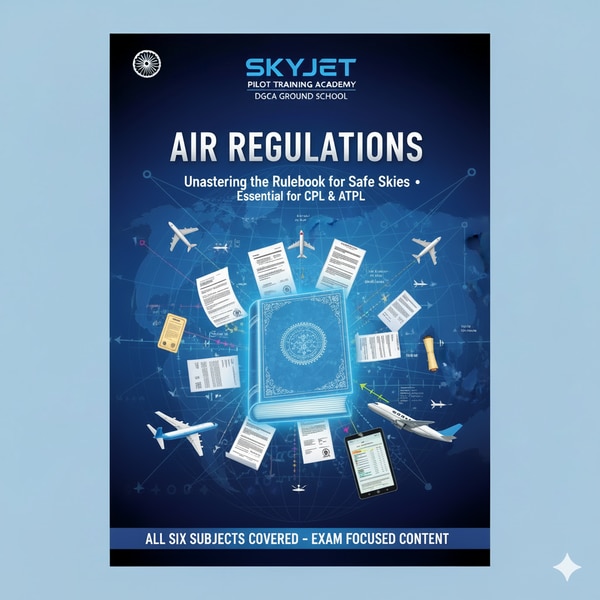
Air Regulation Course in India – DGCA CPL Training at Skyjet Pilot Training Academy At Skyjet Pilot Training Academy, the Air Regulation course in India is designed to simplify complex aviation laws into practical, real-world flight procedures. This DGCA-focused training prepares aspiring pilots to understand legal responsibilities, regulatory compliance, and operational safety required for every flight. Whether you're preparing for a Commercial Pilot License (CPL) or enhancing your aviation knowledge, our structured program ensures you are fully aligned with global and Indian aviation standards. DGCA Air Regulation for CPL Exam – High-Scoring Subject Guide The DGCA Air Regulation exam evaluates your ability to act as a responsible Pilot-in-Command (PIC). With proper preparation, this is one of the most scoring subjects in CPL ground school. 1. Right-of-Way Rules in Aviation Aircraft in distress always gets priority Aircraft on the right has priority at the same altitude Gliders and balloons have priority over powered aircraft 👉 These rules are essential for preventing mid-air conflicts. 2. Airspace Classification (A–G) Understand ATC services and separation rules Learn VFR & IFR visibility and cloud clearance minima 👉 Crucial for safe and legal navigation across controlled and uncontrolled airspace. 3. Pilot Licensing & Airworthiness CPL & PPL validity and renewal rules Class 1 Medical requirements Flight Duty Time Limitations (FDTL) to prevent fatigue 👉 Ensures compliance with safety and operational standards. 4. Important Aviation Documents Certificate of Registration (C of R) Certificate of Airworthiness (C of A) NOTAM (Notice to Airmen) 👉 Helps pilots stay updated on aircraft legality and flight conditions.

Card 2

product image
DGCA - Ground School

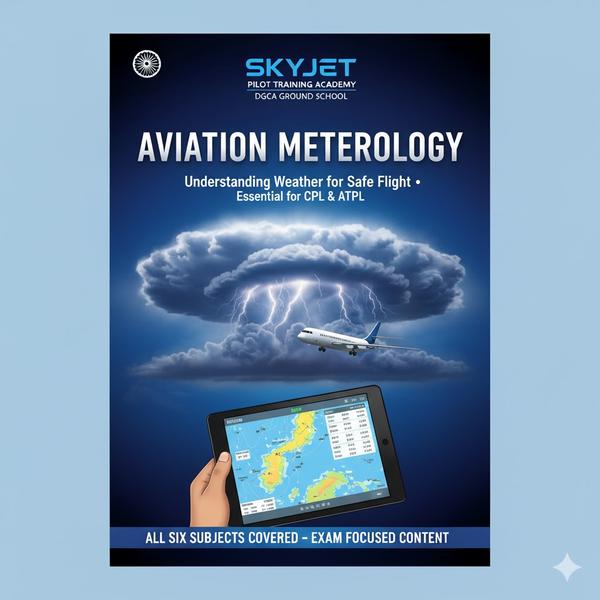
Aviation Meteorology Classes for DGCA CPL – Complete Training Guide At Skyjet Pilot Training Academy, Aviation Meteorology is not just a subject—it is a critical skill that prepares aspiring pilots to safely navigate real-world weather conditions. Designed as per the standards of the Directorate General of Civil Aviation (DGCA), this course helps students develop strong decision-making abilities and in-depth atmospheric understanding. The training goes beyond exam preparation and focuses on building situational awareness, ensuring pilots can confidently manage in-flight weather challenges. Key Areas Covered in Aviation Meteorology Training 1. Atmospheric Basics Understanding atmospheric layers: Troposphere, Tropopause International Standard Atmosphere (ISA) concepts Temperature lapse rates and density Practical Application: Pilots learn to calculate true altitude with temperature corrections and understand how air density impacts aircraft performance. 2. Pressure Systems & Wind Patterns High and low-pressure systems Frontal systems: Warm, Cold, Occluded fronts Global wind patterns and Coriolis effect Practical Application: Helps pilots predict weather changes and correctly use altimeter settings (QNH, QFE) for safe altitude management. 3. Clouds, Fog & Atmospheric Stability Types of clouds: Cumulus, Stratus, Nimbus, Cirrus Cloud formation process Stable vs unstable air masses Practical Application: Pilots identify hazardous clouds like Cumulonimbus (CB) and anticipate fog formation during landing approaches. 4. Aviation Weather Hazards Icing: Clear, Rime, Mixed Turbulence & Clear Air Turbulence (CAT) Wind shear and microbursts Practical Application: Students learn to apply anti-icing and de-icing procedures and maintain safe distances from dangerous weather systems. 5. Weather Reports & Flight Planning METAR (actual weather reports) TAF (forecast reports) Visibility and runway conditions Practical Application: Essential for daily flight planning and determining safe takeoff and landing conditions. DGCA Meteorology – Important Exam Concepts Aviation Meteorology in DGCA CPL exams is application-based, requiring strong conceptual clarity and real-time decision-making ability. Pilot’s Golden Rules Altimetry Relationship between Pressure, Temperature, and Altitude Key principle: “High to Low, Look Out Below” METAR & TAF Decoding Understanding visibility (RVR), cloud ceilings, and weather codes Example: Identifying fog (FG) and low cloud base quickly Atmospheric Stability Unstable air → Thunderstorms & turbulence Stable air → smoother flying conditions Icing Awareness Conditions leading to clear and rime icing Proper use of aircraft de-icing systems

Card 2

product image
DGCA - Ground School

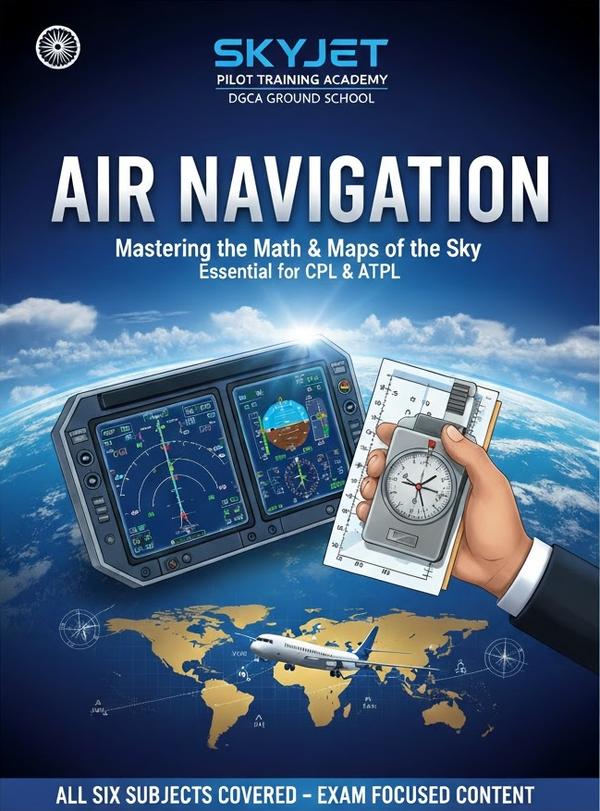
SkyJet Pilot Training Academy – Air Navigation Preparation for DGCA CPL SkyJet Pilot Training Academy is a trusted name for DGCA CPL Ground Classes in India, offering structured and result-oriented training for aspiring commercial pilots. The academy focuses on building a strong theoretical foundation, especially for Air Navigation, one of the most important and calculation-intensive subjects in the DGCA examination. Comprehensive Air Navigation Training SkyJet Academy provides in-depth preparation for the Air Navigation paper, which requires strong skills in mathematics, geometry, and aviation concepts. The training program is carefully designed to ensure conceptual clarity and exam readiness. DGCA-Aligned Curriculum The course follows the latest DGCA syllabus and includes all key Air Navigation topics: Earth Geometry: Latitude, Longitude, Great Circle, Rhumb Line Time Calculations: UTC, LMT, Time Zones Speed, Time & Distance Calculations Dead Reckoning (DR) Navigation Techniques Use of Manual E6B Flight Computer Radio Navigation Aids: VOR, NDB, GPS Expert Instruction Classes are conducted by DGCA-approved instructors, including experienced aviation professionals and former pilots. Training is delivered through modern classrooms equipped with smart boards and digital tools, ensuring interactive and effective learning. Updated Study Material Students receive comprehensive and updated study materials, including: DGCA-focused notes Extensive MCQ question banks Practice worksheets for calculation-based problems Mock Tests & Practice Sessions SkyJet emphasizes regular practice and exam simulation to help students excel in the DGCA exams: Full-length mock tests based on DGCA pattern Daily practice sheets for calculations Personalized doubt-solving sessions Continuous performance evaluation Course Duration & Batch Schedule Air Navigation Preparation Duration Air Navigation training typically requires 60 to 80 days of focused study, depending on the student’s pace and understanding. DGCA CPL Ground Classes Duration The complete CPL Ground Classes program (covering all major subjects like Air Navigation, Meteorology, Air Regulations, Technical General, and RTR preparation) is completed within 4 to 6 months. Weekly Class Schedule Classes are conducted Monday to Friday (Full-Time) Structured timetable ensures systematic preparation Ideal for students targeting DGCA exams held every two months Batch Availability SkyJet Academy conducts up to 6 batches per year, allowing students flexible enrollment options throughout the year.

Subcategory Tags

Phone Number

08048045940

Please keep 0 before dialling the number.

Email Address cpt.abhi@gmail.com

Mon-Thu: 10 AM - 2 PM • Fri: 3 PM - 7AM

Address Royal House building, Karve Rd, near sheetal veg hotel, statue, Kothrud, Pune, Maharashtra-411004

Pune, India, 411004