A Technical General class should take you from aircraft structure and engine operation to system failures, instrument errors, performance calculations and checklist decisions. By the end, you should be able to identify the subject’s full scope, separate general knowledge from Cessna 172R-specific training, and judge whether a class prepares you for the DGCA examination or only supplies memorised definitions.
Key takeaways
- Trace each aircraft system from component purpose to failure indication.
- Connect aerodynamics, engine performance and instruments to aircraft behaviour.
- Use system knowledge to assess abnormal indications and choose safe actions.
- Choose Technical General classes that match your DGCA and flight-training stage.
The aircraft systems and components covered from nose to tail
A complete Aircraft Technical General class should trace aircraft construction from the nose radome and cockpit through the fuselage, wings, empennage and tail, explaining how airframes carry loads and how damage, fatigue, materials and corrosion affect safe operation. It should connect each component to its purpose, indication and failure consequence.
- Structure: primary and secondary structures, skins, spars, ribs, frames, bulkheads, control surfaces, fairings and doors.
- Flight controls: ailerons, elevators, rudder, trim systems, flaps, slats, spoilers and their actuating mechanisms.
- Landing gear and brakes: wheels, tyres, shock absorbers, steering, retraction, anti-skid and braking systems.
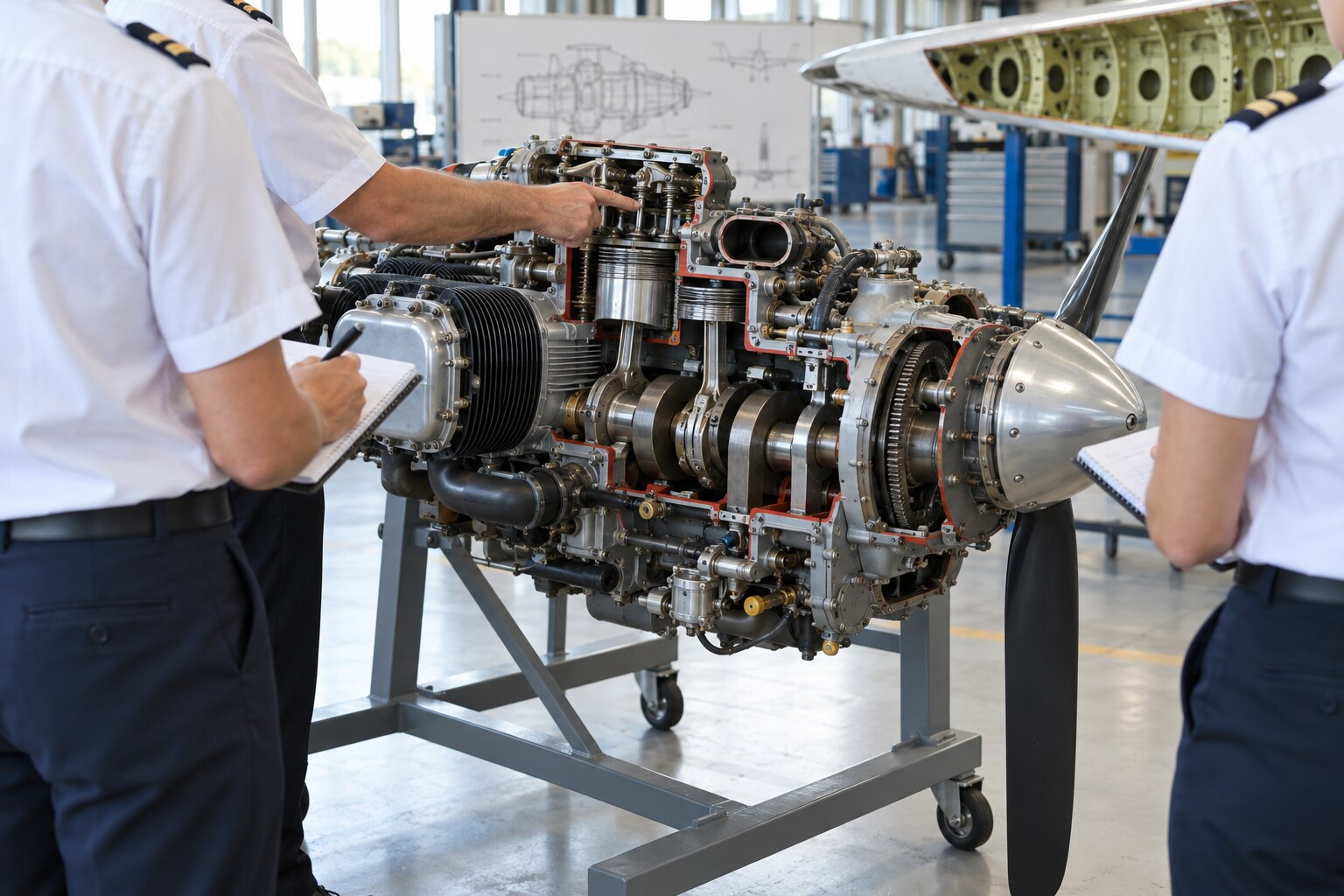
- Powerplants: piston and turbine engines, cylinders or compressors, combustion, induction, exhaust, lubrication, cooling, fuel metering, ignition, starting and engine instruments.
- Propulsion and fuel: propellers, governors, fuel tanks, pumps, filters, selectors, lines, cross-feed and fuel quantity indications.
- Aircraft systems: electrical generation and distribution, batteries, hydraulic, pneumatic and vacuum systems, fire detection and extinguishing, anti-ice and de-ice equipment.
- Crew and cabin systems: pressurisation, air-conditioning, heating, ventilation and oxygen equipment.
- Instruments and avionics: pitot-static and air-data systems, gyroscopes, magnetic compasses, electronic flight displays, radios, transponders, navigation equipment, flight directors and autopilots.
The class should show how sensor, electrical or hydraulic failures alter cockpit indications and aircraft capability. This broad knowledge is not Technical Specific training: the aircraft flight manual, approved checklist and type-specific course control what applies to a Cessna 172R, turboprop or transport-category jet.
How aerodynamics, engines and instruments connect to aircraft behaviour
A blocked pitot tube can make the airspeed indication unreliable while the aircraft continues flying; an incorrect centre of gravity can reduce stability and controllability. Technical General connects these effects instead of treating aerodynamics, engines and instruments as separate definitions.
| Area | Principle studied | Effect on aircraft behaviour and pilot information |
|---|---|---|
| Aerodynamics | Lift and drag, thrust and weight, stability and control, control-surface movement, stalls and spins | Airspeed, angle of attack, loading and configuration determine climb, turn, glide, stall margin and handling |
| Powerplants | Piston and turbine engines, induction or compressor airflow, combustion, fuel metering, lubrication, cooling, ignition and starting | Power production changes with altitude, temperature, throttle or propeller setting; engine instruments reveal oil pressure, temperature, rpm, fuel flow and turbine conditions |
| Instruments | Pitot-static pressure, gyroscopic or electronic attitude sources, magnetic sensing, engine transmitters and electrical supply | Airspeed, altitude, vertical speed, heading, attitude and engine indications depend on accurate sensors and functioning power sources |
The class should show these links through diagrams and failure cases. Icing can increase drag, reduce lift and disturb engine or propeller operation. An electrical failure can remove flight displays, pumps or engine indications, while a pitot-static fault can create contradictory readings.
General principles do not replace aircraft-specific information. The Pilot Operating Handbook, Aircraft Flight Manual, approved checklists and Technical Specific training determine which limitations, indications and procedures apply to a Cessna 172R, turboprop or transport-category jet.
How system knowledge supports real cockpit decisions
Use Technical General knowledge to connect an indication to its source, cross-check it against independent cues, and choose the approved response. The aim is not to diagnose a component like a technician; it is to recognise risk early and fly the aircraft safely.
1. Identify what the instrument is actually measuring. Pitot-static instruments depend on pressure sources, so a blocked pitot tube or static port can produce misleading airspeed, altitude or vertical-speed indications. Compare the display with attitude, power, known flight conditions and other instruments before trusting a single reading.
2. Check independent systems. Gyroscopic instruments and electronic attitude sources can fail through vacuum, electrical or sensor faults. Magnetic compass errors during acceleration, deceleration and turns can make the compass disagree with the heading display, so understand which indication remains reliable before selecting a heading or navigation source.
3. Connect the indication to the likely consequence. An electrical failure can remove radios, displays, pumps or lighting; icing can affect lift, engine airflow and probes; a hydraulic failure can reduce braking or flight-control assistance. These aircraft systems failures demand a risk assessment, not a memorised component definition.
4. Apply the approved checklist, limitation and aircraft flight manual data. Select an alternate source, isolate equipment or shed loads only when the procedure authorises it, then reassess fuel, climb, landing distance, controllability and diversion options. Never improvise a repair in flight.
Scenario-based classes make these decisions practical by linking system diagrams to normal indications, failure symptoms and cockpit actions. Technical General builds the reasoning; aircraft-specific training supplies the exact switch positions, limitations and checklist.
Where Technical General fits in DGCA training and examination preparation
Technical General is the broad aircraft-systems paper in the DGCA syllabus; Technical Specific applies that knowledge to one aircraft type or model. General classes explain principles shared across aircraft, while specific training covers the construction, limitations, systems and operating procedures of an aircraft such as the Cessna 172R.
Technical General does not replace aircraft-specific training or a type-rating syllabus.
| Subject | What it tests | Preparation focus |
|---|---|---|
| Technical General | Aircraft systems, instruments, engines, performance and airworthiness | Understand principles and apply them to unfamiliar situations |
| Technical Specific | One aircraft’s systems, limitations and procedures | Learn the aircraft flight manual, pilot operating handbook and checklists |
| Other DGCA subjects | Air Regulations, Navigation, Meteorology and related knowledge | Study each subject’s terminology, calculations and rules separately |
Examination preparation requires more than memorising component names. Check that your course trains you to:
- Read the DGCA syllabus and divide revision into airframes, powerplants, systems, instruments, performance and airworthiness.
- Practise the question style, including system-failure scenarios, instrument indications, limitations and performance decisions.
- Solve weight and balance calculations using arm, moment, centre of gravity and permissible limits.
- Apply performance charts to power setting, fuel planning, take-off and landing distance, climb, density altitude and operating limitations.
- Distinguish a pilot-permitted operational action from maintenance work requiring authorised personnel and aircraft records.
- Verify every aircraft-specific answer against the approved flight manual, operating handbook and checklist rather than relying on a general rule.
How to choose a class before and during flight training
Choose a class by matching its starting point to your training stage, not by choosing the longest syllabus. For beginner pilot training, you need plain-language explanations of structures, engines, flight controls, instruments and basic performance before dense DGCA pass preparation becomes useful.
A class suits you if the instructor connects diagrams to cockpit indications, weight-and-balance calculations, performance charts and failure decisions. Look for demonstrations using electronic flight displays, pitot-static faults and electrical or sensor failures, not lessons limited to analogue gauges.
During flight training, confirm that general principles remain separate from aircraft-specific training: your Cessna 172R POH, AFM, limitations and approved checklists control what applies in that aeroplane.
For ground school selection, ask whether the provider uses these checks:
- A short entry quiz covering basic aerodynamics, forces, units and simple engine terms.
- Frequent topic tests that explain why an answer is wrong, rather than only reporting a score.
- Timed DGCA-style mock papers before examination preparation is complete.
- Practical questions requiring you to read a performance chart, identify a system failure or distinguish pilot servicing from maintenance work.
| Stage | What you should already know | Teaching method and course check | Suitable choice |
|---|---|---|---|
| Beginner | Basic science and arithmetic | Illustrated lessons, glossary, untimed quizzes | Foundation class |
| Early flight training | Instruments, aircraft controls and simple calculations | Cockpit scenarios and performance exercises | General class alongside flying |
| DGCA pass preparation | Full syllabus familiarity | Timed mocks, error logs and revision tests | Exam-focused class |
| Type transition | General systems knowledge | POH, AFM, limitations and checklist drills | Aircraft-specific training |
SKYJET PILOT TRAINING ACADEMY is worth comparing on whether its General and Cessna 172R Specific courses are assessed separately rather than treated as interchangeable.
Related product
 | DGCA - Ground School Technical General DGCA CPL Technical General: Complete Guide to Aircraft Systems & Aerodynamics Technical General is one of the most important and conceptually... |
Frequently asked questions
What aircraft systems do Technical General classes cover?
They cover aircraft construction and systems from the nose radome and cockpit through the fuselage, wings, empennage and tail, including components, purposes, indications and failure consequences.
How do aerodynamics, engines and instruments connect to aircraft behaviour?
Aerodynamics explains how forces affect flight, engines provide thrust, and instruments show performance and system condition so you can interpret aircraft behaviour.
How does Technical General knowledge support cockpit decisions?
It helps you connect an abnormal indication to the affected component, understand the likely operational consequence and select an appropriate cockpit response.
Where does Technical General fit in DGCA training?
Technical General is a core subject in DGCA ground training and examination preparation, while also supporting practical understanding during flight training.