The cheapest or highest-ranked academy is not automatically the best choice: the organisation selling ground classes may not be the organisation approved to provide flight training. By checking DGCA records, approval documents, aircraft availability, instructor capacity and the complete cost in writing, you can compare schools on evidence rather than promises.
Key takeaways
- Name the actual aircraft operator and flight-training provider in your contract.
- Match the academy’s name against its current DGCA approval documents.
- Demand a line-by-line quotation covering aircraft, instructors, hours and extra charges.
- Inspect aircraft availability, maintenance records and scheduling before enrolling.
Which organisation will actually train you to fly?
Your contract should name the organisation that will provide aircraft, instructors, flight hours and training records. A brand offering classrooms, counselling and overseas admissions is not automatically the organisation that trains you to fly.
| Option | What it means | Evidence to request before enrolment |
|---|---|---|
| Ground-school academy | Teaches subjects such as Air Regulations, Air Navigation, Aviation Meteorology, and Aircraft and Engines for DGCA examinations. | Class schedule, faculty details and fee terms; its certificate is not a CPL or a DGCA examination pass. |
| Flight school or Flight Training Organisation | Conducts aircraft training under a DGCA-approved training programme and maintains your flight-training records. | Exact FTO name, FTO approval status, approved operating base, aircraft registrations, instructor details and written confirmation of credited aircraft hours. |
| Pathway consultant | Advises on domestic or overseas options and may arrange introductions, applications or accommodation. | A contract stating who supplies the aircraft, issues training records, controls delays and handles refunds. |
Check the exact FTO name in DGCA’s current approved-FTO records; “DGCA affiliated” and “internationally recognised” prove nothing by themselves. Approval must cover the operating base, aircraft and instructors you will actually use, not merely a parent company or another location.
Ask who conducts skill-test preparation and who holds your records if the consultant disappears. Before paying a large non-refundable deposit, obtain a DGCA-approved Class 1 medical assessment; a Class 2 medical helps start training but cannot replace Class 1 for CPL issue.
How can you verify an academy’s approval and operating capability?
The name on the brochure is not enough: match the exact FTO name and operating base against DGCA approved FTO records. Check that the approval is current and that its approval scope covers the licence or training you intend to complete, the advertised base airport and the aircraft category being offered.
Ask the academy to show these records and inspect these items on site:
- The current DGCA approval document naming the FTO, approval scope and operating base.
- The aircraft list, including each registration number, type and location. Match those registrations to the aircraft parked at the base.
- Current instructor details, including licences, ratings and instructor authorisations relevant to your training.
- Maintenance status for the aircraft you will fly, including recent inspection or release-to-service entries. A painted aircraft on the ramp proves availability, not airworthiness.
- The training records or flight logs used to record your hours, exercises, instructor signatures and progress.
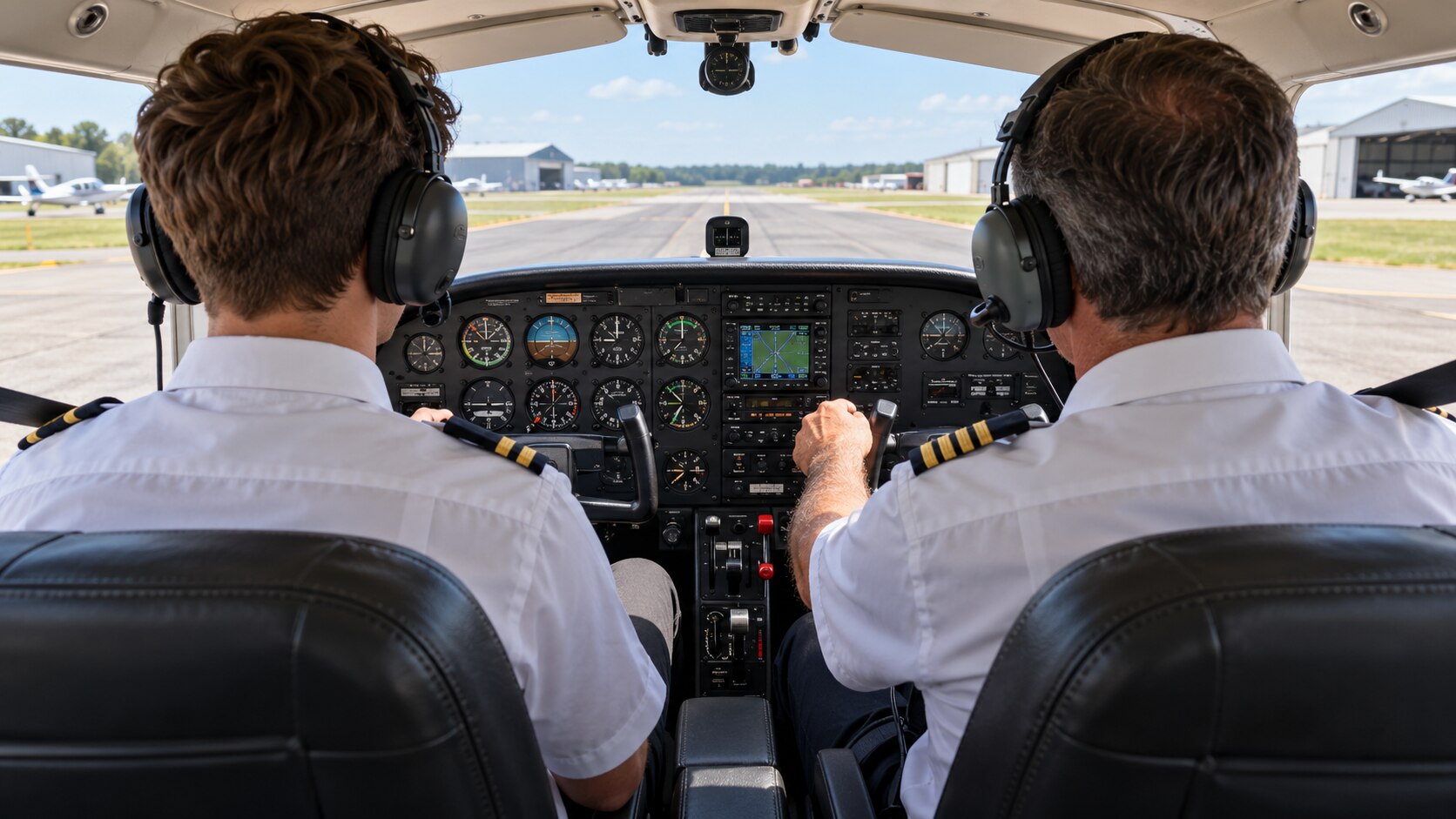
- Evidence that the advertised base is active: a dispatch desk, briefing room, functioning aircraft, fuel arrangements and access to the airport’s operating area.
Ask whether simulator time is credited under the DGCA-approved training programme; it does not automatically replace aircraft hours. Also ask how weather, maintenance, airspace restrictions and airport closures are recorded and recovered.
If the certificate names another organisation, base or fleet, stop and seek a written explanation before paying. Testimonials and “DGCA affiliated” wording cannot validate flight hours. Verify the FTO directly through current DGCA records and keep copies of the documents attached to your enrolment agreement.
What should a complete pilot-training quotation include?
A 200-hour package is the regulatory floor, not a guaranteed completion time or final CPL training cost. Compare the hours by category—pilot-in-command, cross-country, instrument and night—not only the total, because extra hours in one category cannot fix a shortfall in another.
| Cost line | What the quotation must state | Why it changes the total |
|---|---|---|
| Aircraft-hour charges | Rate by aircraft type, billing basis, fuel policy and escalation rule | Additional sorties or an aircraft change can increase the bill |
| Simulator charges | Rate, permitted use and hours credited under the approved training programme | Simulator time cannot automatically replace required aircraft hours |
| Landing fees and licence fees | Whether each fee is included, excluded or payable at actual cost | Airport charges and licence applications can sit outside the package |
| Examinations and retests | DGCA examination fees, skill-test charges and repeat-test rates | A failed test creates a separate expense |
| Medical, equipment and living costs | Medicals, radio-telephony, headset, uniform, books, accommodation and transport | These items are easy to miss in a headline price |
Ask for the quotation and contract to show the included aircraft rating, flight-test aircraft, total planned hours, hourly rates, cancellation charges and the price of weather or maintenance delays. Confirm whether multi-engine training and its skill test are included; a single-engine CPL is a different purchase, and airline type training is separate.
For overseas training, add DGCA conversion expenses, extra examinations, document verification, travel and any Indian bridging training. Compare the full itemised total, then ask how many additional hours recent students paid for before reaching test standard.
Will you receive enough flying time to finish on schedule?
A 200-hour CPL minimum tells you the regulatory floor, not when you will finish. Ask for recent operating data showing whether the academy has enough serviceable aircraft, instructors and daily flying slots to deliver training consistently.
Ask these questions and request records, not promises:
- How many aircraft of each training type are currently serviceable, and what was the aircraft availability rate during the past six months?
- What were the average monthly flying hours per student during the past year?
- How many instructors are actively flying, and how many students does each instructor supervise?
- How many sorties were cancelled because of weather interruptions and maintenance downtime?
- What is the median calendar time taken by the last 10 students to complete flight training, and how many needed hours beyond 200?
| Evidence | Strong capacity signal | Warning sign |
|---|---|---|
| Serviceability | A dated fleet list, registrations and availability records | A brochure fleet with no current serviceability figures |
| Student throughput | Average monthly flying hours and recent completion data | A promised finish date without student-level results |
| Instructor capacity | A current roster matched to student numbers | Frequent instructor changes or long booking queues |
| Operating constraints | Published airport hours, cross-country routes and recovery slots | Restrictions that leave aircraft idle for weeks |
Compare the academy’s actual monthly output with your required pace. Weather, inspections, fuel shortages, airspace restrictions and instructor rostering can reduce it; a low fee becomes costly when extra months, hours and accommodation follow. Ask who pays for cancelled sorties and whether the contract provides a delay-recovery plan.
What should you inspect before signing an enrolment agreement?
Do not accept a promise that instructors are “experienced.” Ask to meet the instructors who would actually teach you, and check their current licences, ratings, instructional privileges and recent flying activity. The instructor-to-student ratio should describe your assigned batch, not the academy’s entire enrolment.
Use the visit to test whether progress is measured or merely reported:
1. Ask to see a sample student progress record showing completed exercises, outstanding weaknesses, flight-hour categories and instructor comments. Confirm that briefing and debriefing follow every flight; without both, repeated errors can remain invisible.
2. Request anonymised student outcomes from the previous graduating groups: median completion time, aircraft hours flown per month, examination success, licence-application delays and the number still waiting to finish. Compare these figures with the advertised schedule.
3. Ask how the academy recovers lost flying days caused by weather, maintenance, airport closures, fuel shortages or instructor absence. Look for a written process covering aircraft substitution, instructor reallocation, additional operating days and priority for students nearing required milestones.
4. Ask to inspect aircraft logbooks or a maintenance-status summary, including recent downtime and the number of serviceable training aircraft by type. A large fleet means little if only one aircraft is available.
A ground-school provider such as SKYJET PILOT TRAINING ACADEMY can help with examination preparation, but it does not replace the FTO’s duty to document flying progress and deliver aircraft training. Ensure the enrolment agreement names the organisation responsible for those records, delays and refunds.
Frequently asked questions
Which organisation will actually train me to fly?
Your contract should identify the organisation providing the aircraft, instructors, flight hours and training records. A counselling or classroom brand may not operate the flight school.
How can I verify a pilot academy’s approval and operating capability?
Ask for current DGCA approval documents, confirm the approved organisation’s legal name and verify that it operates suitable aircraft, instructors and training facilities.
What should a complete pilot-training quotation include?
Require a line-by-line breakdown of aircraft hire, instructor charges, flight hours, ground training, examinations, accommodation, taxes, equipment and every stated extra fee.
How can I tell whether I will receive enough flying time to finish on schedule?
Ask how many serviceable aircraft and instructors are available, how flights are scheduled, how weather and maintenance delays are handled, and what happens when training falls behind.
What should I inspect before signing an enrolment agreement?
Check the contracting entity, refund terms, cancellation rules, included flight hours, additional-hour rates, delay provisions, training records and the process for resolving disputes.