
An airline pilot interview tests more than your licence and flight hours: recruiters assess technical judgment, communication, documentation, decision-making and professional behaviour across several stages. By preparing your records, researching the operator and practising operational answers, you can identify weak areas before the assessment rather than discovering them in front of an interview panel.
Key takeaways
- Map every selection stage before you practise.
- Bring verified licences, medical records and flight-experience documents.
- Answer technical questions through safety, risk and operational judgment.
- Practise concise communication for interviews, group exercises and simulator assessments.
Map the Selection Process and Research the Airline
Expect a funnel, not one conversation. The airline pilot interview process commonly moves from application screening to pilot aptitude testing, technical interview questions for pilots, a human-resources or competency interview, a group exercise, simulator assessment, and final medical or document checks.
- Application screening: reviewers compare your CV, licences, ratings, Class 1 medical, flight hours and eligibility with the vacancy.
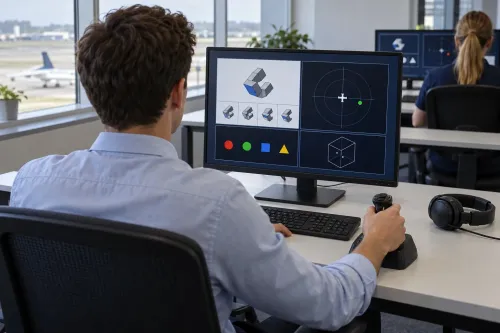
- Pilot aptitude testing: expect timed exercises covering numerical reasoning, spatial awareness, memory, multitasking and concentration.
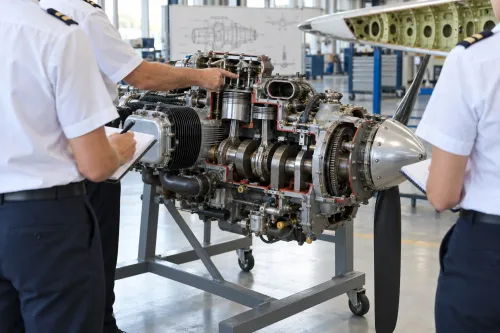
- Technical interview: explain aircraft systems, weather decisions, performance, fuel planning, navigation and radio communication in operational terms.
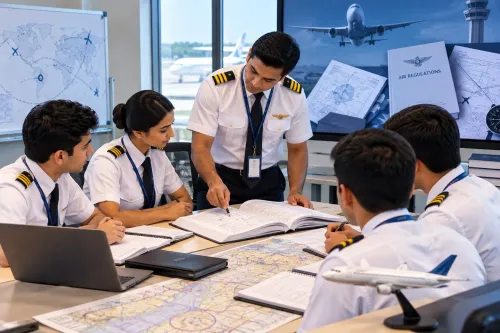
- Competency and group assessment: demonstrate communication, teamwork, leadership, listening and calm decision-making.
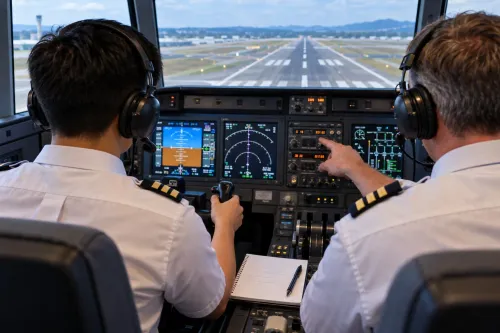
- Simulator assessment: follow instructions, manage workload, use checklists and respond safely when the plan changes.
- Medical and document checks: verify your identity, training records, licences and medical status before an offer or joining date.
Research the airline before applying. Identify its fleet types, operating bases, route network, recruitment route, minimum hours, training contract and stated pilot competencies. Read the careers page, pilot-recruitment instructions, fleet information and recent operational announcements; do not rely on forum summaries.
Check whether the vacancy leads to a first officer role, a type-rating programme or a cadet pathway. A DGCA CPL does not equal airline employment, an instrument rating, a multi-engine qualification or later airline transport-pilot progression. It gives legal privileges subject to its conditions, not a job, type qualification or selection guarantee.
Get a Class 1 medical early, before major training spending. A later restriction can stop commercial flying after you have passed examinations and paid for flight training.
Prepare a Verified Document and Flight-Experience File
A single verified master file prevents small discrepancies from becoming a credibility problem. Keep the same legal name, date of birth, licence number and contact details across your CV, passport, CPL, Class 1 medical certificate, RTR (A) licence, DGCA examination records and application forms.
Organise these pilot interview documents before you submit or upload anything:
- CPL, instrument rating, multi-engine rating, Class 1 medical certificate, passport, DGCA examination results and any overseas licence-conversion documents.
- A current flight-time summary and logbook copies showing total time, Pilot-in-Command time, cross-country, instrument, multi-engine, night and recent flying.
- Training records, skill-test paperwork and instructor endorsements that support the hours claimed.
| Record | Reconcile against | Check before the interview |
|---|---|---|
| Logbook totals | Training records and summary sheet | Total, PIC, dual, instrument, night and cross-country hours |
| Aircraft entries | Dispatch sheets and aircraft records | Registration, type, date, route and credited time |
| Licence and medical | Passport, DGCA records and medical paperwork | Name spelling, licence validity, ratings and Class 1 status |
| Examination history | DGCA result records | Subjects passed, dates and any attempts |
Resolve every mismatch; do not adjust figures to make your experience look stronger. Mark corrected entries transparently and carry supporting records so you can explain the change.
Treat the pilot logbook interview as an evidence check, not a memory test. Be ready to explain a flight’s purpose, weather, fuel plan, defects, limitations and how you verified its recorded hours. The Indian CPL threshold includes 200 hours with specified experience categories, but meeting it does not prove airline-level readiness.
Turn Technical Knowledge into Safe Operational Decisions
Treat every airline pilot technical interview problem as a dispatch decision, not a definition exercise. For aviation technical questions, explain what the information means for safety, then state your action. A strong answer to a systems, weather, performance, fuel or communication scenario follows this sequence:
- Identify the hazard, affected system and indications. State what you know and what remains uncertain.
- Apply the approved checklist, aircraft flight manual, operating limitations or company procedure. Do not invent a memory item when a checklist is required.
- Assess the consequence of continuing, including wind components, weight and balance, take-off or landing limits, alternate requirements and fuel reserves.
- Obtain updated information and preserve options. Read the METAR TAF NOTAM, request clarification from ATC or dispatch, and keep a go-around, diversion or return available.
- Communicate the plan using clear, standard phraseology. State who must be informed, what decision you made and what trigger would change it.
Practise pilot scenario questions aloud with incomplete or changing information. For example, explain how a deteriorating TAF, a runway tailwind, a deferred defect or rising fuel burn changes your plan. Interviewers want disciplined prioritisation: aviate, navigate, communicate, verify and reassess.
For each answer, finish with a landing or discontinuation point. Say when you would reject the take-off, hold no longer, divert, declare an emergency or land at the nearest suitable airport. This shows that safety margins, rather than reaching the original destination, control your decision.
Show Judgment, Communication and Professional Behaviour
Answer competency questions with evidence, not adjectives. Use the STAR interview method for pilots: describe the Situation, your Task, the Action you personally took, and the Result, including what changed afterward.
- Choose one real example involving a mistake, weak performance, disagreement or changed plan.
- State the hazard or error you recognised, then explain the decision you made and why it protected safety.
- Describe the communication: use plain, structured English, confirm understanding and invite correction.
- Demonstrate crew resource management by respectfully challenging a captain, instructor or examiner with a specific concern. Confirm the response, and escalate through the proper chain of command when the risk remains.
- End with the lesson and a concrete procedural change. Blaming weather, another pilot or an examiner without examining your own part signals poor judgment.
English proficiency means intelligibility, comprehension, structure, vocabulary and interaction, not an accent-free voice. ICAO’s six-level framework treats Level 4 as the minimum operational level, so practise concise radio-style explanations for abnormal and high-workload situations.
For risk questions, use the PAVE checklist: Pilot, Aircraft, enVironment and External pressures. Check your own fitness with the IMSAFE checklist: Illness, Medication, Stress, Alcohol, Fatigue and Emotion. State when you would delay, divert or discontinue rather than forcing the original plan.
Show checklist discipline by identifying the hazard, stating the indications, using the approved checklist or aircraft flight manual, explaining the consequence of continuing, and naming the landing or discontinuation point. Never invent a memory item when a checklist is required.
Practise to a Measurable Standard and Choose Support Carefully
A useful target is four to eight weeks of focused practice: 60–90 minutes on five days each week. Start earlier if your logbook, technical knowledge or spoken English needs repair; do not wait until an assessment invitation arrives.
Practise against evidence, not confidence. Record answers and check whether you can:
- Explain every logbook entry, including weather, fuel, defects, limitations and the reason for the flight.
- Read METARs, TAFs and NOTAMs, calculate wind components, and justify an alternate, fuel or performance decision.
- Answer a mistake, weak-performance, disagreement or changing-plan question using action, risk identified, lesson and changed procedure.
- Complete a technical or competency answer in 90 seconds, then defend your decision under follow-up questions.
- State accurately what your DGCA CPL, instrument rating and multi-engine qualification permit; do not present them as an airline job, type rating or airline transport-pilot progression.
| Situation | Coaching value | Decision |
|---|---|---|
| Cadet pilot selection with no interview experience | Builds timed-answer and group-exercise habits | Useful after basic preparation |
| Direct-entry First Officer interview with solid records | Exposes weak operational reasoning and communication | Useful two to four weeks before assessment |
| Unverified logbook, incomplete licensing or weak METAR knowledge | Polishing delivery will hide, not fix, the risk | Premature; repair the foundation first |
A mock airline pilot interview is worthwhile when the coach gives specific notes on safety judgment, accuracy, structure and listening—not memorised scripts. SKYJET PILOT TRAINING ACADEMY can be useful for checking whether DGCA ground knowledge is becoming an operational decision rather than a definition repeated from memory.
Frequently asked questions
What stages are included in an airline pilot interview process?
The process commonly includes application screening, aptitude testing, technical questions, a competency or human-resources interview, group exercise, simulator assessment, and final medical or document checks.
Which documents should you prepare for an airline pilot interview?
Prepare a verified file containing your licences, medical records, identity documents, training records and flight-experience evidence. Check that names, dates, licence details and flight totals match across documents.
How should you answer technical pilot interview questions?
Connect your technical knowledge to safe operational decisions. Explain the risks, priorities, procedures, communication and escalation steps behind your answer.
What behaviour do airlines assess beyond technical knowledge?
Airlines assess judgment, communication, teamwork, professionalism, situational awareness and your ability to make safe decisions under pressure.