Commercial pilot licence coaching is the academic and planning layer of pilot training, not a substitute for aircraft time or a licence. You should finish your evaluation knowing what happens in class, how much work the programme demands, which documents and medical checks to confirm, and whether a provider is preparing you for the correct examinations and later flight milestones.
Key takeaways
- Treat coaching as DGCA ground preparation, not a replacement for flight training.
- Expect diagnostic tests, subject lessons, question practice and scheduled doubt-clearing.
- Ask how the provider handles failed papers, reattempts and revised study plans.
- Compare instructor experience, progress tracking and coordination with your flight school.
What does commercial pilot licence coaching cover, and where does it fit in the CPL route?
Commercial pilot licence coaching is ground preparation, not a substitute for flying. It combines classroom teaching, question practice, doubt resolution, progress tests, study planning, and coordination with your flight-training schedule.
The normal CPL training sequence is:
1. Check educational eligibility, identity documents, and medical status. Plan and obtain the Class 1 medical before committing heavily to flight training; a medical restriction can stop or change your route.
2. Study the principal DGCA subjects: Air Regulations, Air Navigation, Aviation Meteorology, and aircraft-and-engine technical subjects.
3. Prepare for and complete the DGCA CPL examinations through lessons, worked problems, timed papers, revision, and instructor feedback. These papers test factual recall as well as navigation, performance, weather, and systems application.
4. Complete the required flight training, instructor briefings, solo and pilot-in-command under-training flying, logbook entries, and sign-offs at an approved flight school.
5. Complete the CPL skill test, assemble medical and training records, and submit the licence application.
6. Prepare separately for airline selection, including aptitude testing, technical interviews, and required documentation.
Do not assume that a subject plan covering only DGCA papers includes the Radio Telephony Restricted (Aeronautical) examination. RTR(A) is a separate communications qualification administered through telecommunications authorities, so ask where its preparation fits.
Coaching does not provide aircraft hours, instructor flying, pilot-in-command under-training logbook entries, a CPL skill test, or a licence. A CPL is also not an airline first-officer qualification; operator selection, type qualification where applicable, multi-crew training, and line training come afterwards.
What will your first classes look like?
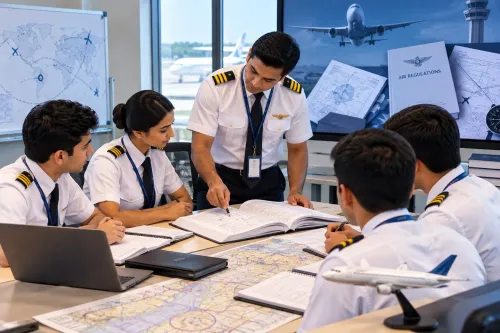
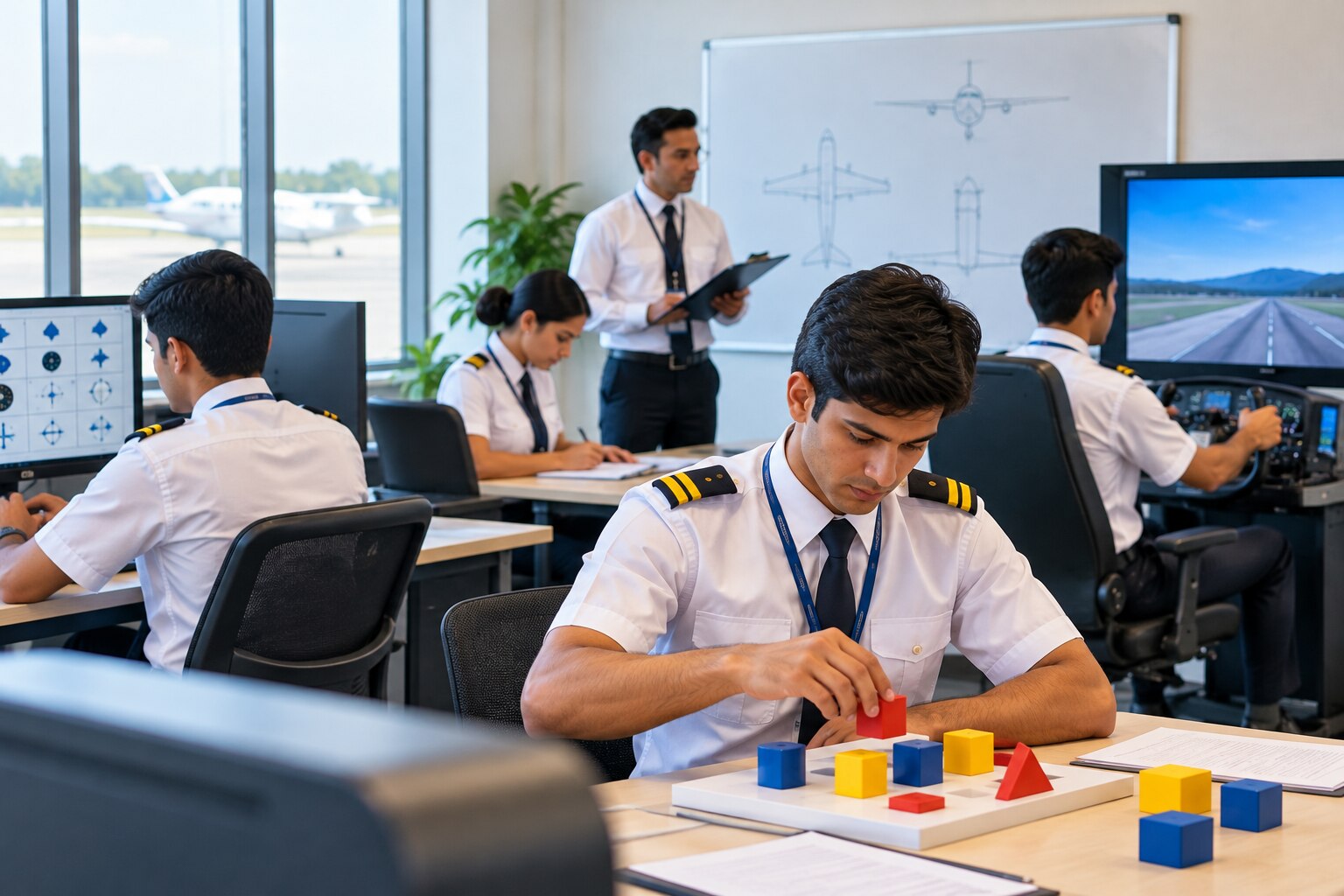
Your first class should produce a study plan and an exam-ready decision, not a pile of notes. The instructor may review the syllabus, diagnostic-test results, study schedule and doubt process before working through a real problem.
1. Expect a navigation coaching exercise using charts or sectional material. You may draw a wind triangle, calculate heading, track, time, speed and fuel, then apply variation and deviation. Scoring recall questions is not enough if you cannot reproduce the complete calculation under time pressure.
2. Expect aviation weather interpretation from weather reports and forecasts, plus regulation-based flight scenarios. The instructor should ask you to explain why an answer is correct, not merely identify an option. Aircraft systems and aerodynamics questions should be diagnosed by concept, calculation or misreading.
3. Expect factual recall across Air Regulations, Air Navigation, Aviation Meteorology and aircraft-and-engine technical subjects, followed by oral questioning and worked calculations. A useful answer shows the controlling source: regulations, AIP material, NOTAMs, meteorological products or the aircraft manual.
4. Treat coaching notes and old question banks as study aids, not final authority. If a copied answer conflicts with current operational information, check the applicable regulation, AIP, NOTAM, weather product or aircraft manual and ask the instructor to resolve the conflict.
The same discipline helps separate DGCA ground classes from RTR(A), aircraft-specific and flight-school material.
How much weekly work should you expect, and what happens after a failed paper?
A workable CPL study schedule combines scheduled classroom hours with same-day review, problem-solving practice, spaced revision cycles, timed DGCA mock tests, and dedicated doubt sessions. The exact hours depend on your subjects, pace, and other commitments; coaching is not a timetable you can outsource.
A sample week might include:
- Review one technical topic after class and write a short recall summary.
- Complete worked navigation and performance problems, including headings, tracks, fuel, time, and speed.
- Attempt one timed paper without notes.
- Analyse every wrong answer and record the cause.
- Revisit weak areas before the next class as part of your exam revision plan.
Rereading notes is not enough. If you cannot reproduce a complete navigation exercise under time pressure and explain each calculation, you are not ready in the practical sense. Progress tests must measure improvement, not attendance.
After a failed DGCA subject, use this recovery process:
- Obtain the mark or feedback available and identify whether the failure involved knowledge, calculation, time management, or misreading.
- Rebuild the topic plan around the diagnosed weakness, rather than repeating every lesson unchanged.
- Complete fresh questions and full exercises; memorising the same answers only hides the gap.
- Use the next examination cycle to set a realistic target, with additional doubt sessions and timed papers before re-entry.
How should you check a coaching provider before enrolling?
Before paying CPL coaching fees, compare pilot coaching institutes against evidence, not promises. Use this DGCA coaching provider checklist: ask for a sample lesson, the current subject-by-subject syllabus, and an anonymised corrected mock paper. Confirm educational eligibility, identity records, medical status, current DGCA examination requirements, and separate RTR(A) preparation.
| Item | What to verify | Warning sign |
|---|---|---|
| Instructor experience | Teaching the current DGCA syllabus, not only old question banks | Vague claims about “expert faculty” |
| Attendance | Classroom and online options, plus live versus recorded access | Recorded videos presented as live teaching |
| Batch and support | Batch size and the person answering technical questions outside class hours | No named doubt-support contact |
| Testing | Mock-test frequency, timed papers, worked problems, and oral questioning | Tests measure attendance only |
| Correction | Written explanations for wrong answers and calculation errors | Marks supplied without analysis |
| Results | Anonymised pass or progress records with the examined subject and period | Guaranteed passes or unexplained success percentages |
| Fees and refunds | Written inclusions for examination guidance, registration help, and refund terms | Verbal promises or unclear exclusions |
For SKYJET PILOT TRAINING ACADEMY in Pune, ask the same questions directly: obtain its current batch format, teaching access, mock schedule, fee inclusions, and coordination with flight training in writing. A provider should distinguish DGCA ground coaching from aircraft hours, instructor sign-offs, and the skill test. Airline-placement claims are not evidence of a coaching outcome.
Related products
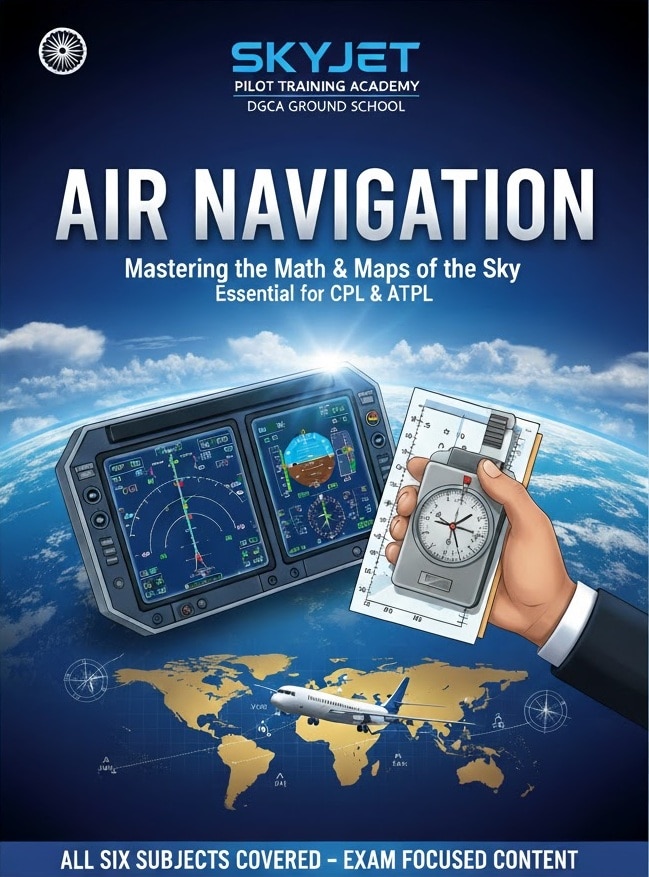 | DGCA - Ground School Air Navigation SkyJet Pilot Training Academy – Air Navigation Preparation for DGCA CPL SkyJet Pilot Training Academy is a trusted name for DGCA CPL Ground Classes... |
 | DGCA - Ground School Air Regulation Course Air Regulation Course in India – DGCA CPL Training at Skyjet Pilot Training Academy At Skyjet Pilot Training Academy, the Air Regulation course in... |
What should happen after coaching, and how do you judge the full training plan?
Passing the written papers is a handover point, not the end of training. Your plan should move from a Class 1 medical and flight-school enrolment to supervised flying, logbook evidence, instructor sign-offs, the CPL skill test, and the licence application.
Check that the full plan identifies:
- The regulatory target of 200 CPL flight hours for an Indian aeroplane CPL
- At least 100 hours as pilot-in-command or solo
- At least 50 hours of pilot-in-command cross-country flying
- At least 20 hours of instrument training
- At least 5 hours of night flying, including 10 take-offs and landings
- Who checks your logbook entries and instructor sign-offs
- When the CPL skill test occurs and who handles the licence application
These are logged regulatory minimums, not proof of competence or a promise that you finish at exactly 200 hours. Weather, aircraft serviceability, maintenance downtime, instructor availability, airspace restrictions, traffic, repeated exercises, check flights, and failed checks can extend training, so budget contingency hours, time, and money.
The CPL is not an airline first-officer qualification. After licensing, airline pilot selection, operator training, aircraft type qualification where applicable, multi-crew training, and line training remain. Training overseas does not remove Indian conversion or validation work, document verification, medical and examination requirements, or DGCA acceptance of foreign logbooks and training records.
Frequently asked questions
What does commercial pilot licence coaching cover?
It covers ground subjects, classroom teaching, question practice, doubt resolution, progress tests and study planning for the DGCA examination stage. It does not replace flight training.
What should you expect from your first coaching classes?
Expect an assessment of your existing knowledge, an explanation of the CPL route, subject schedules, study materials and an initial plan for combining ground study with flying.
How much weekly work does CPL coaching require?
Your workload includes class attendance, revision, practice questions, mock tests and error review. Ask the provider for a weekly timetable and the expected study hours before enrolling.
What happens after failing a CPL paper?
Review the failed paper, identify weak topics, revise the study plan and prepare for the next permitted attempt. Ask how the provider tracks reattempts and provides targeted support.
How should you check a commercial pilot licence coaching provider?
Check instructor qualifications, class size, syllabus coverage, test frequency, doubt support, attendance expectations, results tracking and whether the provider coordinates with your flight-training schedule.
Related products
 | DGCA - Ground School Technical General DGCA CPL Technical General: Complete Guide to Aircraft Systems & Aerodynamics Technical General is one of the most important and conceptually... |
 | DGCA - Ground School Aviation Meteorology Classes Aviation Meteorology Classes for DGCA CPL – Complete Training Guide At Skyjet Pilot Training Academy, Aviation Meteorology is not just a subject—it... |